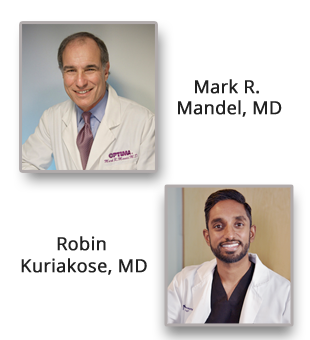
Offices in Hayward

Understanding Keratoconus
The cornea is the clear, dome-shaped window at the front of your eye. It plays a critical role in focusing light so you can see clearly. In keratoconus, the cornea gradually weakens, thins, and bulges outward into an irregular cone shape. This distortion causes blurry vision, glare, light sensitivity, and difficulty seeing — even with glasses or contact lenses.
Keratoconus typically begins during the teenage years or early twenties and can progressively worsen over time. It affects both eyes, though one eye may be more affected than the other. Without treatment, keratoconus can lead to significant vision loss and, in advanced cases, may require a corneal transplant.
The good news: there is a treatment that can stop keratoconus in its tracks.
What Is Corneal Cross-Linking?
Corneal cross-linking (CXL) is the only treatment proven to halt the progression of keratoconus. Think of the collagen fibers in your cornea like the rungs of a ladder — in keratoconus, those rungs are weak and the ladder bows under pressure. Cross-linking creates new bonds between those collagen fibers, strengthening the cornea and preventing it from continuing to bulge and thin.
The procedure uses riboflavin (vitamin B2) eye drops combined with a controlled application of ultraviolet-A (UV-A) light. The riboflavin absorbs the UV-A energy and triggers a reaction that creates new connections — or “cross-links” — between the collagen fibers in the cornea. The result is a stronger, more stable cornea.
Cross-linking is FDA-approved for adults and patients aged 13 and older. However, occasionally, we will perform the procedure on patients under 13 as an “off-label” ( technically non-FDA-approved) procedure.
Epi-On Cross-Linking: The Next Generation
Our practice exclusively uses the latest FDA-approved epi-on (epithelium-on) cross-linking technology.
To understand why this matters, it helps to know a little about corneal anatomy. The outermost layer of the cornea is called the epithelium — a thin, protective skin-like layer that shields the eye from infection, keeps the surface smooth, and helps maintain comfort.
The traditional approach (epi-off) required the surgeon to gently remove this protective layer before applying the riboflavin drops. While effective at strengthening the cornea, removing the epithelium essentially created a large surface wound on the eye. This meant significant pain for several days, a slow recovery period of one to two weeks, the need for a bandage contact lens, and increased risk of infection and corneal haze.
Our approach (epi-on) keeps the epithelium completely intact. A specially formulated riboflavin solution is applied directly to the surface of the eye, and advanced penetration-enhancing technology allows the riboflavin to pass through the intact epithelium and reach the deeper corneal layers where cross-linking occurs. During the UV-A light treatment, specially designed goggles deliver supplemental oxygen to the corneal surface, which optimizes the cross-linking reaction and ensures the procedure is just as effective as the traditional method — without the wound.
Why Epi-On Is Better for You
By keeping the epithelium intact, epi-on cross-linking offers meaningful advantages over the traditional approach:
- Significantly less pain. Because there is no area without epithelium on the surface of the eye, most patients experience only mild discomfort rather than the days of significant pain associated with the traditional
- Faster visual recovery. Many patients notice their vision returning to baseline within days rather than the one to two weeks typical of the traditional approach.
- Lower risk of infection. The intact epithelium continues to serve as the eye’s natural barrier against bacteria and other organisms, dramatically reducing the risk of postoperative infection.
- Less corneal haze. Clinical studies have shown that epi-on cross-linking produces significantly less corneal haze — a clouding of the cornea that can temporarily affect vision after the traditional procedure.
- No bandage contact lens required. Without a surface wound, there is no need to wear a protective bandage contact lens during
- Proven Published clinical research has demonstrated that epi-on cross-linking with supplemental oxygen achieves comparable corneal strengthening and flattening results to the traditional method at three years of follow-up.
What to Expect: Before, During, and After
Before Your Procedure
We will perform a comprehensive eye examination, including detailed corneal mapping (topography/ tomography) and thickness measurements (pachymetry), to confirm that cross-linking is appropriate for you. You will also have a thorough discussion about the procedure, what to expect, and any questions you may have.
During the Procedure
Epi-on cross-linking is performed in our office and typically takes approximately 30 to 45 minutes per eye. Here is what happens:
- Numbing drops are applied to your eye so you will not feel pain during the procedure.
- Riboflavin eye drops are applied to the surface of your eye in a specific sequence over approximately 10 minutes. These specially formulated drops are designed to penetrate through the intact epithelium into the deeper layers of the cornea.
- Supplemental oxygen goggles are placed over your eye. These goggles deliver oxygen to the corneal surface during the UV-A light treatment, which is essential for the cross-linking reaction to work
- UV-A light is applied to the cornea for approximately 11 minutes. During this time, you will be asked to look at a small fixation light. The riboflavin absorbs the UV-A energy and creates the new cross-links that strengthen your
- Your eye is rinsed, and you are given postoperative eye drops and
You will be awake throughout the procedure. Most patients describe the experience as comfortable and straightforward.
After the Procedure
Because the surface of your eye remains intact, recovery is typically quick and comfortable:
- Most patients experience mild eye redness, light sensitivity, and watery eyes for the first day or two.
- You will use prescription eye drops (typically an antibiotic and an anti-inflammatory) for a period of time.
- Many patients return to normal daily activities within one to two
- Your vision may fluctuate slightly in the first few weeks as the cross-linking effect stabilizes, but most patients notice improvement
- Follow-up visits will be scheduled to monitor your healing and corneal
Risks and Possible Complications
Corneal cross-linking is considered a safe procedure, but like any medical treatment, it carries some risks. It is important that you understand these before proceeding.
Common side effects (experienced by some patients and usually temporary):
- Eye redness (conjunctival hyperemia) — the most common side effect, occurring in approximately 1 in 3 patients. This typically resolves within a few days.
- Light sensitivity (photophobia) — temporary increased sensitivity to bright
- Mild corneal haze — a slight cloudiness in the cornea that usually clears over weeks to months.
- Punctate keratitis — tiny, superficial dots on the corneal surface that typically heal on their own.
- Eye pain or irritation — usually mild and manageable with over-the-counter pain relievers and lubricating drops.
- Increased tearing — temporary watery
- Dry eye — temporary dryness that can be managed with artificial
- Mild eyelid swelling — usually resolves within a day or
- Temporary reduction in visual clarity — vision may fluctuate during the healing period.
Less common but important risks:
- Corneal epithelial defect — in rare cases, a small area of the surface epithelium may be disrupted during the This typically heals within a few days.
- Corneal striae — fine lines in the cornea that are usually
- Anterior chamber flare — mild inflammation inside the eye that resolves with anti-inflammatory drops.
- Herpes simplex reactivation — in patients with a history of herpes eye infections, cross-linking may trigger a It is critical that you inform your doctor if you have ever had a herpes eye infection, cold sores, or shingles.
- Treatment failure — in a small percentage of cases, keratoconus may continue to progress despite cross-linking, and a repeat procedure or alternative treatment may be needed.
Rare complications:
- Persistent corneal haze or scarring — in rare cases, haze may persist longer than expected.
- Endothelial cell loss — the cells lining the inside of the cornea could potentially be affected, though this risk is minimized by careful thickness measurements before the procedure.
It is important to note that many of the most serious complications historically associated with cross-linking — such as corneal infection, severe pain, and prolonged healing — were primarily related to the traditional epi-off technique, where the protective epithelium was removed. By keeping the epithelium intact, epi-on cross-linking significantly reduces these risks.
Who Is a Candidate?
Epi-on cross-linking may be right for you if:
- You have been diagnosed with progressive keratoconus — meaning your corneal shape is getting worse over time.
- You are age 13 or older.
- Your cornea meets the minimum thickness requirements as determined by your doctor’s measurements.
Cross-linking may not be appropriate if:
- You have a history of herpes simplex eye infection (this will be carefully evaluated).
- You have severe corneal scarring that blocks the treatment
- You are pregnant or nursing.
- You have certain autoimmune conditions that may affect
Your doctor will perform a thorough evaluation to determine whether you are a good candidate.
Frequently Asked Questions
Does cross-linking cure keratoconus?
Cross-linking does not cure keratoconus, but it is proven to stop or significantly slow its progression. Think of it as pressing the “pause button” on the disease. You will still need glasses or contact lenses for clear vision, but cross-linking can help prevent your vision from getting worse and may reduce the likelihood of needing a corneal transplant in the future.
Will cross-linking improve my vision?
The primary goal of cross-linking is to stabilize your cornea and prevent further vision loss. However, many patients do experience some improvement in vision after the procedure, as the cornea may flatten slightly and become more regular. However, do not plan on your vision improving. Remember.. the goal is to stabilize… not improve the vision.
Is the procedure painful?
With epi-on cross-linking, most patients experience only mild discomfort. Numbing drops are used during the procedure, and because the surface of the eye is not disturbed, postoperative pain is minimal compared to the traditional approach.
How long does the effect last?
Current evidence shows that the strengthening effect of cross-linking is long-lasting. Studies have followed patients for many years and demonstrated sustained corneal stability. In rare cases, a repeat procedure may be considered if progression resumes.
Can both eyes be treated?
Yes. Your we will discuss the timing of treatment for each eye. In most cases, one eye is treated first, with the second eye treated at a later date.
Will my insurance cover cross-linking?
Corneal cross-linking is FDA-approved, and many insurance plans do cover the procedure for progressive keratoconus. Our office will work with your insurance company to obtain authorization and will discuss any out-of-pocket costs with you before the procedure.
Why Choose Our Practice?
We are proud to be among the very first centers in Northern California to offer FDA-approved epi-on corneal cross-linking. Our surgeons have extensive experience performing cross-linking procedures and have transitioned exclusively to this next-generation technology to provide patients with the safest, most comfortable experience and the best possible outcomes.
We believe every keratoconus patient deserves access to the most advanced treatment available — and we are committed to delivering it.
Take the Next Step
If you or a family member has been diagnosed with keratoconus, or if you have been told your cornea is changing shape, we encourage you to schedule a consultation. Early treatment with cross-linking can make a significant difference in preserving your vision for the future.